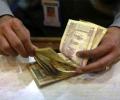
The dollar's gains against other currencies overseas and a lower opening in the domestic equity market also put pressure on the local unit, forex dealers said.

'Clearly, the depositors of cooperative banks need the maximum protection.'
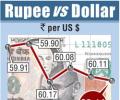
In New York market, the dollar fell against euro late yesterday, as European Central Bank President Mario Draghi said that central bank officials had discussed quantitative easing as an option to fight falling inflation.

Equity benchmarks fell sharply on Thursday in line with an extremely weak trend in the global markets, with the Sensex plunging 1,154.78 points in early trade. Persistent foreign fund outflows and a spurt in crude oil prices also dampened sentiment. The 30-share BSE benchmark was trading 1,154.78 points lower at 53,053.75. The broader NSE Nifty tumbled 335.65 points to 15,904.65.

The banking regulator was uncomfortable with the runaway pace at which consumer credit was growing.

IT majors along with metal names Sesa Goa and Hindalco buck trend.

The US Federal Reserve has retained the benchmark interest rate at near-zero level and struck an upbeat note saying that the American economy has continued to strengthen in recent months.

'Continue with your SIPs to get the benefit of lower average prices in this challenging market environment.'
.jpg)
Bank stocks have underperformed in the second quarter of FY'14 with the BSE Bankex declining 18 per cent compared to fall of 1 per cent in the BSE 30-stock index, Sensex, during this period.

Nine of the top-10 most valued companies together lost a whopping Rs 309,178.44 crore in market valuation last week as selloffs continued. In a holiday-shortened past week, the 30-share BSE Sensex plummeted 1,836.95 points or 3.11 per cent amid geopolitical tensions, global sell-off triggered by a hawkish US Federal Reserve and unabated foreign fund outflows. From the top-10 list, State Bank of India was the lone gainer as its valuation jumped Rs 18,340.07 crore to reach Rs 467,069.54 crore.
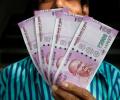
Heavy selling of the US dollar by banks and exporters in the face of renewed capital inflows predominantly kept sentiment highly buoyant

The 30-share Sensex ended up 292 points at 29,571 and the 50-share Nifty closed up 75 points at 8,910.
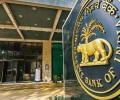
Battling a sharp surge in inflation, the Reserve Bank is all for a smooth monetary policy response and the desire to have smaller hikes led it to tighten the policy in an off-schedule meet, a source said on Thursday. Inflation has been massively impacted by Russia's invasion of Ukraine and will in due course also reflect the dent caused by Indonesia banning palm oil exports, the source aware of central bank thinking said, indicating that there was no other option but to respond. "The idea is to have a smooth policy response, not to put in large cold turkey responses," the source said, making it clear that the preference is for smaller magnitude responses and not larger ones.

'I found it unbelievable that L&T said 45,000 jobs were waiting to be filled because of unavailability of suitable skillsets.' 'So, when the Opposition sweepingly says there are no jobs, I'm sorry... I'm not saying it's raining jobs, but there are jobs. The (skill) gap has to be bridged.'

Gains in realty, teck, IT, power, consumer durables, banking and oil & gas stocks helped both the key indices to score gains.

Bajaj Finance was the top gainer in the Sensex pack, soaring around 8 per cent, followed by IndusInd Bank, Bajaj Finserv, ICICI Bank, Kotak Bank, SBI, Bajaj Auto and HDFC Bank. NSE Nifty surged 211.50 points to 14,864.55.

'.. if you do not want to take the asset allocation call.'' 'This category of funds can offer optimum risk-adjusted returns.'

Within three trading sessions in May, foreign portfolio investors (FPIs) have pumped in Rs 9,461 crore into Indian equities. This follows net inflows worth Rs 7,936 crore in March, and Rs 11,631 crore in April. The trend, analysts said, could continue going ahead as the US Federal Reserve may soon halt its interest rate hike cycle, which will strengthen foreign fund inflows into emerging markets, including India.

Spot gold was bid lower at $ 1,298 an ounce in early European trade.

Silver also rose 0.8 per cent to $16.63 an ounce.
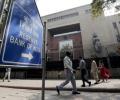
Foreign brokerage Bank of America Merrill Lynch said they expect the headline inflation to rise to 3.3 per cent in May, but added that it is within the 2-6 per cent range which the government has set for the RBI.

Wall Street-correlated stock markets are facing the risk of correction, as Christopher Wood, the global head of equity strategy at Jefferies, conveys to investors in his latest edition of GREED & fear. Rising crude oil prices, which are nearing $100 a barrel (Brent), pose a threat to the global central bank's battle against inflation and have led to a re-evaluation of its exposure to Indian stocks. "The potential for more US Federal Reserve (Fed) rate hikes, combined with the risk that monetary tightening finally bites as regards the economy, remains a risk for Wall Street-correlated world stock markets. "There is also the oil factor. This is why GREED & fear continues to believe the pain trade is down. "Areas in Asia, such as Indian midcaps, which have already done very well, are at obvious risk of some profit-taking," writes Wood.
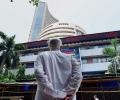
The Reserve Bank of India has already reduced the policy rate by a total of 75 basis points, or 0.75 per cent, since January.
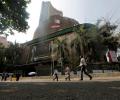
Nifty PSU bank index dropped nearly 2%

ITC, Sun Pharma, Maruti, M&M, Tata Motors, HCL Tech, Wipro, Infosys, HUL, Bharti Airtel and Reliance were among the major losers. Kotak Bank rose the most by 1.59 per cent, followed by IndusInd Bank, Bajaj Finance and Bajaj Finserv. L&T, SBI, TCS and HDFC Bank also closed higher.

India's record current account deficit has been a key reason behind why Standard & Poor's and Fitch Ratings cut their outlooks on the country's sovereign rating to 'negative' last year.

The NSE Nifty, which again went past the 9,900-mark to touch a high of 9,903.95 intra-day, finally settled 103.15 points, or 1.05 per cent higher at 9,897.30.

The partially convertible rupee closed at 61.45/46 per dollar, weaker from Wednesday's 61.35/36.

Benchmark indices fell on Monday with the BSE Sensex declining 306 points, mainly dragged down by Reliance Industries. Foreign funds outflow also added to the overall bearish trend in equities on Monday. The 30-share BSE benchmark fell 306.01 points or 0.55 per cent to settle at 55,766.22. During the day, it declined 535.15 points or 0.95 per cent to 55,537.08. The broader NSE Nifty dipped 88.45 points or 0.53 per cent to 16,631.

Pressure has been mounting on the Reserve Bank of India to cut interest rates in the wake of declining retail inflation and the need to fuel growth momentum. However, the RBI will have to do a tightrope walk as globally interest rates are inching upwards.
.jpg)
The rupee resumed slightly lower at 62.05 per dollar as against the last weekend's level of 62.04 at the Interbank Foreign Exchange market. It recovered to 61.88 per dollar before quoting 61.93 at 1045 hours.

Benchmark Sensex trimmed early gains to close marginally higher while Nifty settled flat in choppy trade on Tuesday as gains in auto shares were offset by selling pressure in banking and energy shares. The 30-share BSE barometer closed marginally up by 37.08 points or 0.06 per cent to 60,978.75 with 15 of its stocks ending in green and the rest in red. The index opened higher and gained over 300 points to a high of 61,266.06 in early trade.
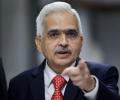
Reserve Bank Governor Shaktikanta Das on Wednesday said underlying economic activity in India continues to be strong, but external factors will cause some "dent" to the economy. Speaking at the BFSI Insight Summit 2022 organised by Business Standard, Das said the RBI tracks 70 fast moving indicators and most of them are in the "green box". It is the external sector, mired by a fear of recession or clear visibility about slowing growth in a large part of the world, where the challenges lie, he said, adding that the impact of external demand will "dent" the economy.
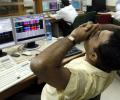
Tech Mahindra, the top loser in the Sensex pack, shed over 2.5 per cent. It was followed by UltraTech Cement, Reliance Industries, HCL Tech, HDFC, Kotak Bank, HDFC Bank and TCS. NSE Nifty plunged 179.35 points to 17,745.90.

'Investment creates capacity and reduces inflation. Income, employment, and savings rise.'
.jpg)
Markets ended flat on Tuesday, amid a volatile trading session, as investors exercised caution ahead of the two-day FOMC meet starting today and Reserve Bank of India's monetary policy later this week.

Strike is total, impacts all branches of PSU and private banks. Clearing operation at RBI also hit.
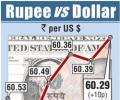
Forex dealers said besides increased selling of the American currency by exporters and banks, a higher opening in the domestic equity market and the dollar's weakness against other currencies overseas supported the rupee.

Banks now ride on what is defined as a "banking outlet". This is a fixed-point service unit, manned by either the bank's staff or its business correspondent (BC), where all kinds of services - acceptance of deposits, encashment of cheques, cash withdrawal or lending of money - are provided for a minimum of four hours per day, for at least five days a week. Banks are now turning to reposition the manner in which they acquire customers, report Abhijit Lele and Raghu Mohan.

Bharti Airtel was the top gainer in the Sensex pack, rallying over 4 per cent, followed by Axis Bank, Tata Steel, Titan, Maruti and Bajaj Finance. NSE Nifty surged 225.85 points to its record closing of 16,931.05.
